
Cathedral of San Nicola in Sassari (Duomo): A Thousand Years of History, the Side Door Secret, Opening Hours, and Nearby Gems
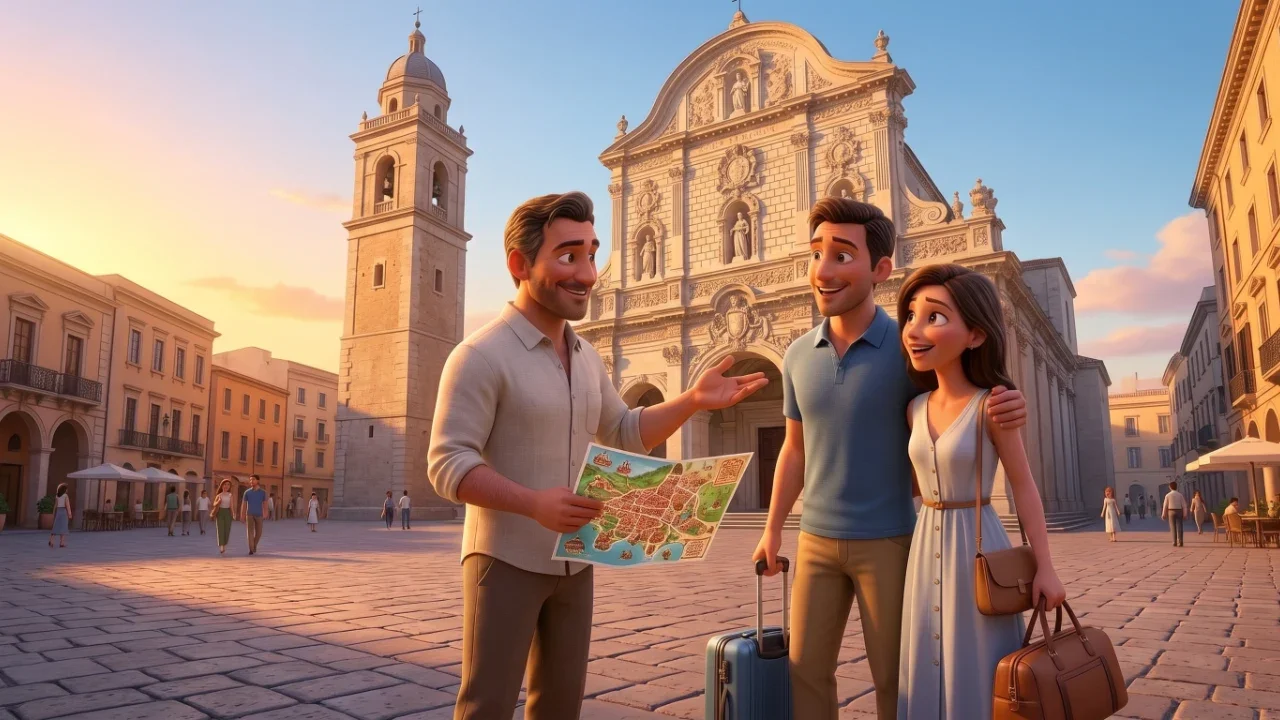
There is a precise moment, while strolling through the labyrinth of medieval alleys in Sassari's historic center, when you look up and are left completely breathless. Emerging from the narrow paved lanes into Piazza Duomo, you suddenly stand before the monumental Baroque facade of the Cathedral of San Nicola di Bari: a triumph of carved limestone, statues, columns, friezes, and shifting light that tells nearly a thousand years of Sardinian, Catalan, and Spanish history.
Why does a church born in the Middle Ages wear a Baroque gown worthy of the grandest Iberian cathedrals? What masterpieces are hidden inside? And above all, what is the local secret that most tourists don't know to get inside even when the main doors look closed? Let's find out together in this first stop of our journey through sacred and monumental Sassari by Villa Malvasio.
1. The Insider Tip: Is the Main Door Closed? Try the Side Entrance!
Let's start right away with a priceless practical tip: visitors often arrive in Piazza Duomo, see the large central wooden doors of the Baroque facade closed (and the portico gate shut), and walk away assuming the Cathedral cannot be visited.
Do not make this mistake! Most of the time, the Cathedral of San Nicola is open, but daily access is through the right-hand side entrance (facing toward Piazza del Comune and Palazzo Ducale). Before giving up on your visit, walk along the right side of the building: stepping through that side door will lead you straight into the cool, peaceful transept of the Duomo.
2. Three Souls in a Single Temple: From Romanesque to Catalan-Gothic and Baroque Triumph
Stepping inside San Nicola means walking through a life-size art history book. Dedicated to "Sanctu Nicola de Thatari", the church is first mentioned in the early 12th century in the famous Condaghe of San Pietro di Silki (one of the oldest written records in the Sardinian language). Looking closely, you can spot its three great eras:
- Romanesque and 13th-Century Origins (12th–13th Century): From the original Romanesque church, a section of wall survives in the sacristy, upon which the imposing square bell tower with hanging arches was built in the second half of the 13th century, still rising on the left side today.
- The Catalan-Gothic Revolution (15th–16th Century): When the bishop's seat was moved in 1441 from the ancient Basilica of San Gavino in Porto Torres inside the safe walls of Sassari, San Nicola became a Cathedral. The Romanesque building was demolished and rebuilt in Catalan-Gothic style in two phases (1434–1444 and 1480 to the early 1500s), giving us the wide single nave covered by splendid ribbed cross vaults and side chapels.
- The Breathtaking Baroque Facade (1650–1723): Between the mid-17th century and the first quarter of the 18th century, the Duomo was crowned with its dramatic Spanish-Plateresque Baroque facade. On the lower level opens a majestic three-arched portico; looking upward, the stone comes alive with three large niches housing the statues of the Turritan Martyrs Saints Gavino, Proto, and Gianuario, topped in the center by the statue of Saint Nicholas, patron saint of Sassari, and at the highest curved peak by the figure of the Eternal Father giving His blessing.
3. The 4 Masterpieces Not to Miss Inside the Duomo (and the Diocesan Museum)
Once inside (remembering the side door trick!), take at least 30 minutes to admire four authentic wonders:
- The "Madonna del Bosco" (14th Century): At the center of the monumental high altar sits a precious 14th-century Sienese-school panel painting depicting the Madonna and Child (known as Madonna del Bosco), whose devotion dates back to the church's earliest medieval layout.
- The 17th-Century Wooden Choir: Behind the high altar lies a true masterpiece of local craftsmanship: the walnut choir stalls finely carved by Sassari master cabinetmakers in the second half of the 17th century.
- The Neoclassical Mausoleum of the Count of Moriana (1807): In the left arm of the transept stands the solemn white marble funerary monument dedicated to Placido Benedetto of Savoy, Count of Moriana (brother of Kings Victor Amadeus III and Charles Emmanuel IV), who died in Sassari in 1802. The work was sculpted by Felice Festa, a Turin artist from Antonio Canova's school.
- The Treasure of the Diocesan Museum: From the Cathedral's Aragonese sacristy, you can access the gold, silver, illuminated missals, and sacred vestments of the Diocesan Museum, while its rich Art Gallery (Pinacoteca) and archaeological section are housed just steps away in the nearby Church of San Michele on Via Cetti.
4. The "Golden Quad" Around Piazza Duomo: Why 1 Night in Sassari Is Never Enough
The beauty of the Cathedral of San Nicola is that it sits right at the center of an extraordinary cluster of monuments reachable in less than 2 minutes on foot. Here is what you can pair with your visit in the same afternoon (and why our guests always choose to stay at least 2 or 3 nights):
- ⛪ Church of San Giacomo (15 meters from the Duomo): Facing right between Piazza Duomo and Via Duomo, this 13th-century church with a simple buttressed exterior hides two rare 18th-century rocaille Baroque altars crafted by Piedmontese stucco masters.
- 🏰 Palazzo Ducale and "The Duke's Cellars" (40 meters away): In nearby Piazza del Comune stands the 18th-century palace of Don Antonio Manca, Duke of Asinara (now City Hall). In addition to The Duke's Rooms, you can descend underground and walk along an evocative suspended catwalk above 16th-century cellars carved into the rock!
- 🎨 Church of Santa Caterina and Mus'A Pinacoteca at Canopoleno (100 meters away): A few steps uphill bring you to Piazza Santa Caterina, where you can admire the grand late-Renaissance Jesuit church (housing the 17th-century painting that shows the ancient Rosello Fountain) and visit the National Art Gallery inside the historic Canopoleno building (discover the full itinerary in our guide on What to see in Sassari: historic center, churches, and Sanna Museum).
- 🔥 A Living Stage of Traditions: Piazza Duomo is not only sacred art, but also a vibrant stage for city life: from solemn Holy Week processions to the grand finale of the Blue Circuit during the autumn food festival in Sassari Tourist Destination.
5. Practical Information: Opening Hours, Tickets, and Google Maps Location
- 📍 Address & Google Maps Location: Piazza Duomo, 07100 Sassari (SS), Italy – Click here to open the exact location on Google Maps.
- 🎟️ Ticket Price: Admission to the Cathedral of San Nicola is free (modest dress and silence during services are kindly requested). Guided tours with an entry fee apply for the Diocesan Museum.
- ⏰ Approximate Opening Hours:
- Weekdays: Morning 08:45 AM – 12:00 PM (Holy Mass at 08:00 AM) | Afternoon 04:30 PM – 07:00 PM (Rosary at 05:30 PM).
- Sundays & Holidays: Morning 09:00 AM – 11:30 AM (Holy Mass at 10:00 AM) | Afternoon 05:00 PM – 07:00 PM (Holy Mass at 06:00 PM).
- Important note on hours: Sightseeing visits are permitted outside of liturgical services. Since opening hours for historic churches and the Diocesan Museum may vary seasonally, remember to check the right-hand side entrance or confirm current schedules at the municipal tourist offices (Piazza Azuni InfoPoint or InfoSassari at Via Sebastiano Satta 13, phone +39 079 2008072 / +39 079 279977) or by calling the parish (+39 079 232574).
6. How to Visit the Historic Center Without ZTL Stress by Choosing Villa Malvasio
Piazza Duomo is located in the heart of Sassari's pedestrian area and Limited Traffic Zone (ZTL). Driving your own car into the narrow medieval lanes means risking automatic camera fines or wasting an hour hunting for a parking spot.
By choosing Villa Malvasio as your charming retreat for 2 or 3 nights, you turn your cultural visit into pure pleasure:
- 🚗 Free Secure On-Site Parking: Leave your car or motorcycle safely inside our gated courtyard in Li Punti and reach the edge of the old town (or Piazza Azuni by bus or taxi) in under 10 minutes, completely stress-free.
- 🛁 Total Relaxation Upon Your Return: After a day spent gazing up at Gothic vaults, Baroque facades, and museums, return to the peace of our private park, swimming pool, and the regenerating comfort of a Suite with Hot Tub and Chromotherapy.
Book directly on the official Villa Malvasio website to get our best guaranteed rate (with zero booking portal commissions) and let us guide you through the finest secrets of Sassari!