
Much More Than a Beach: The Stone Alghero
Alghero is famous worldwide for its Catalan ramparts overlooking the sea and the Coral Riviera. Yet, its countryside guards a much older and more mysterious history, dating back thousands of years before the arrival of the Aragonese.
Just a few kilometers outside the town, you enter a real time machine that allows you to explore the evolution of Sardinian civilization, from the Neolithic to the Bronze Age, through two monuments of inestimable value.
1. The Nuragic Complex of Palmavera: The King’s Palace
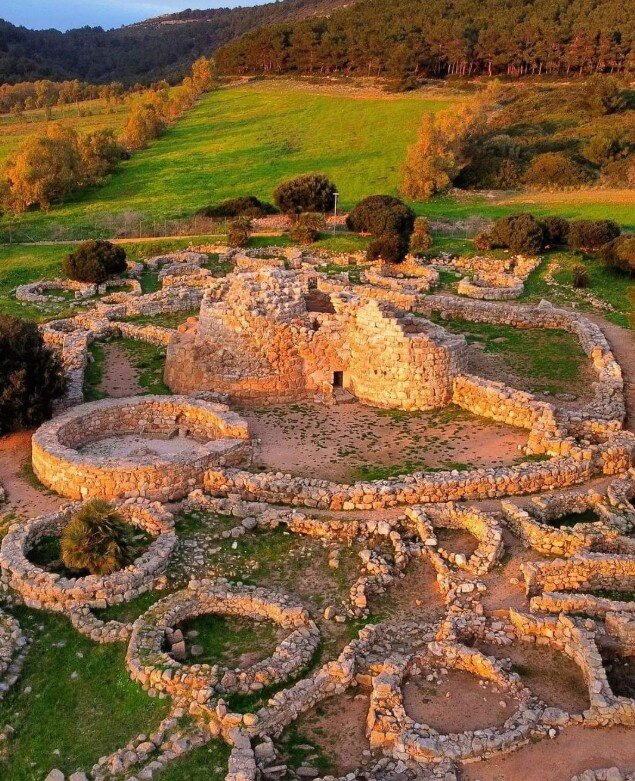
Along the road leading to Porto Conte stands one of the most important and best-preserved Nuragic sites in Northern Sardinia: the Nuraghe Palmavera.
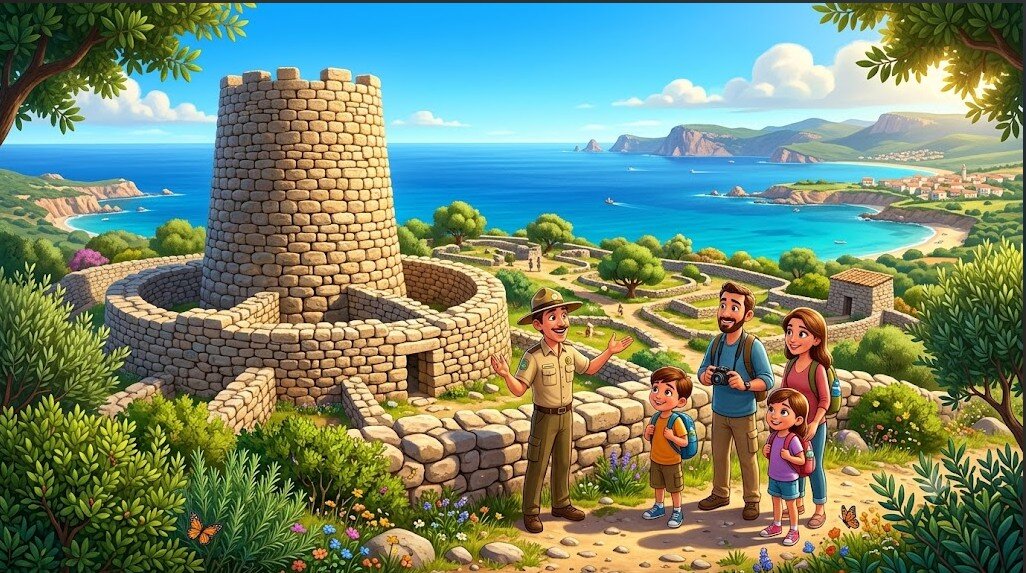
This is not a simple watchtower, but a real, complex prehistoric "palace". Built starting from the 15th century BC, the site consists of a main limestone tower (the keep), a secondary sandstone tower, a massive outer wall, and the remains of a vast village made up of dozens of circular huts. The most fascinating room of the entire complex is undoubtedly the Meeting Hut. Entering this spacious circular structure, you can admire the stone seat intended for the village chief and, in the center, a small stone model of a nuraghe, probably used for sacred and ritual purposes. An incredible testimony to the social organization of these ancient populations.
2. The Necropolis of Anghelu Ruju: The Blood-Red Realm of the Dead
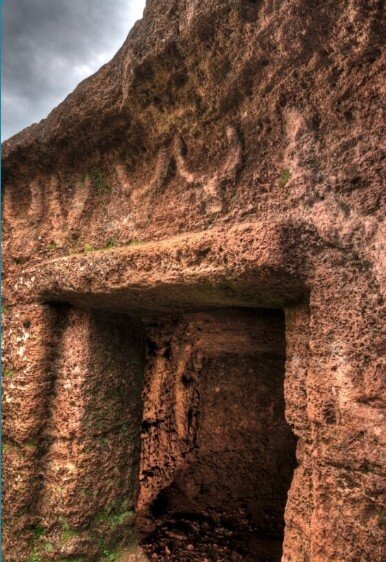
Moving towards the inland plain of Alghero, in the I Piani area, you take a leap back in time over five thousand years (3200 BC). The Necropolis of Anghelu Ruju is the largest prehistoric cemetery area in all of Northern Sardinia, consisting of no less than 38 domus de janas (Fairy Houses) carved into the sandstone rock.
Exploring this site means immersing yourself in a world of ancestral cults linked to fertility and the afterlife. On the walls of these hypogeal tombs, you can see carved false doors (symbolic passages to the world of the dead) and, above all, large bull horns, symbolizing the regenerating strength of the male deity. But the detail that makes this place unique and from which it takes its name (Anghelu Ruju means "Red Angel") is the massive presence of red ochre: the color of blood and rebirth, smeared on the walls of the tombs and on the deceased to propitiate their return to life.
Your Base Camp at Villa Malvasio
To explore the immense archaeological heritage of the North-West, logistics are fundamental. By choosing Villa Malvasio as your strategic retreat, you ensure privileged access to these wonders without having to endure the traffic and crowds of the large coastal centers.
About a half-hour drive from our property, you can walk among the mysteries of Palmavera and Anghelu Ruju, and then escape to the reassuring silence of our countryside. In our exclusive Urban Retreat, with only 8 beds, the luxury of absolute tranquility awaits you: a dip in the pool, a sunset aperitif, and the convenience of private internal parking for your car.
🕒 Practical Info and Visits
- Nuraghe Palmavera: Located along the SS 127 bis (towards Porto Conte). Open every day. Hours: November to March 10:00-14:00; April, May, and October 10:00-18:00; June to September 10:00-19:00. Full ticket: € 7.00 (reduced € 5.00).
- Necropolis of Anghelu Ruju: Located along the SP 42 (towards Porto Torres/Sassari). Follows exactly the same opening hours and rates as the Nuraghe Palmavera.
Our tip: If you decide to visit both sites, or if you also plan to explore other attractions in the Alghero area (such as the Grotta Verde or Neptune's Grotto), we suggest asking at the ticket office for the Alghero Ticket or the cumulative ticket, to optimize your costs and visiting times.