
Sanctuary of San Pietro di Silki in Sassari: The Mystery of the Rediscovered Statue, the Famous "Condaghe", Millenary History, and Opening Hours

There is a place in Sassari that was born even before the city itself. A quiet hill caressed by the breeze and surrounded by centuries-old trees southwest of the historic center, where for nearly a thousand years the people of Sassari have walked to entrust their hopes, fulfill vows, and seek peace: the Sanctuary and Monumental Complex of San Pietro di Silki.
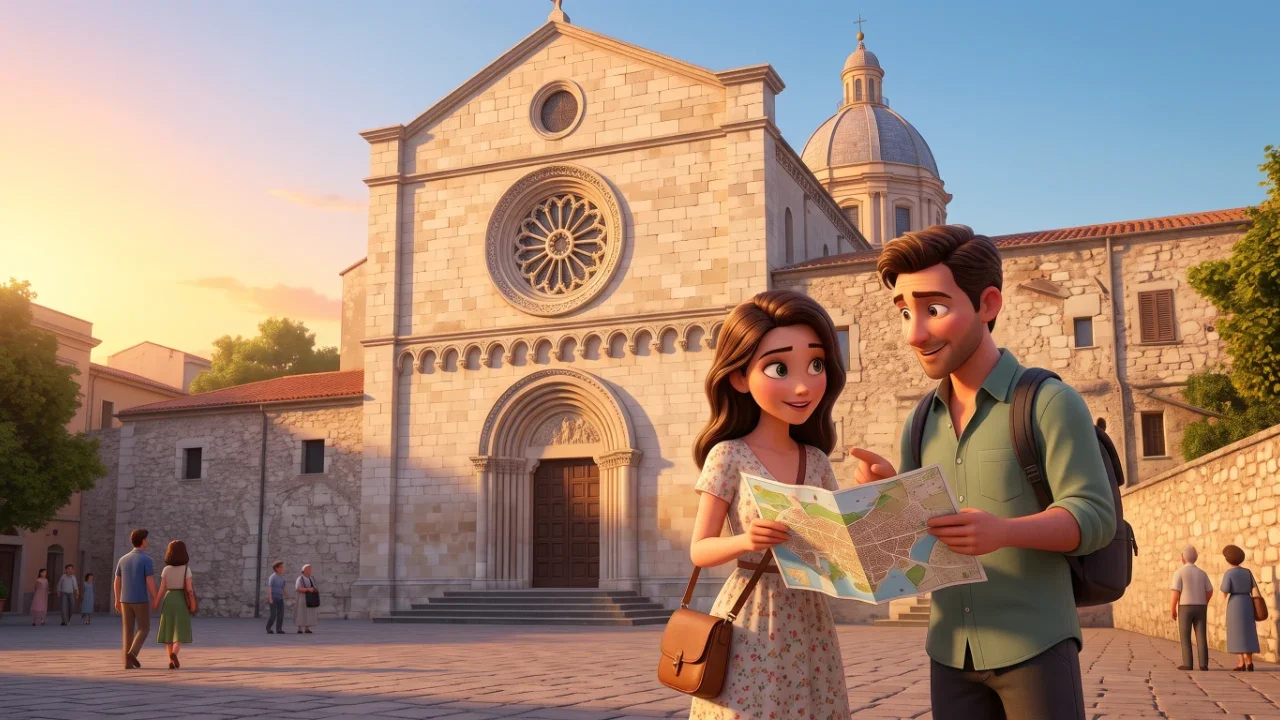
Facing the wide, sunlit Piazza San Pietro—at the end of the evocative Via delle Croci, once lined with the stations of the Way of the Cross—this church is not only one of the oldest Catholic places of worship in Northern Sardinia, but also the treasure chest that holds the island's oldest written memory and the statue most beloved and venerated by locals: Our Lady of Graces (Madonna delle Grazie). What stood here in the Middle Ages? What is the miraculous story behind the rediscovery of the Virgin's statue?
And why does a visit to San Pietro di Silki make your cultural stay in Sassari unforgettable? Let's find out in the third stop of our itinerary by Villa Malvasio.
1. Before Sassari There Was "Silki": The Benedictine Abbey and the Treasure of the Condaghe (1065–1082)
To understand the charm of this sanctuary, we must travel back almost a millennium, when Sassari was not yet the walled city we know today, and the countryside was dotted with small medieval villages (ville). Right in the vanished village of Silki, between 1065 and 1082 (as recorded in the Libellus Judicum Turritanorum), the church of San Pietro was founded alongside an important abbey of Benedictine nuns.
Within the walls of this ancient monastery between the 11th and 13th centuries, a parchment manuscript of priceless value for European history and linguistics was handwritten: the famous Condaghe of San Pietro di Silki. It is an administrative and legal register written in ancient Logudorese Sardinian vernacular (rather than Latin!), in which the abbesses recorded donations, land sales, legal disputes, and family trees.
Thanks to the pages of the Condaghe di Silki (now preserved at the University Library of Sassari), we know about daily life in medieval Giudicale Sardinia and find the earliest historical mentions of "Thatari" (Sassari) and its church of San Nicola (you can explore further historical details on the parish's official website in the sections dedicated to the Condaghe of San Pietro di Silki and the history of the Church of San Pietro di Silki).
2. From Nuns to Franciscans and the Miracle of the Rediscovered Statue of Our Lady of Graces
Rebuilt in Romanesque style in the 13th century—from which precious wall sections and the characteristic bell tower still survive—the church experienced a decisive turning point in the 1400s. In 1467, at the wish of Archbishop Antonio Cano and the city authorities, the complex of Silki was officially entrusted to the Franciscan Friars Minor of the Observance, who still lovingly safeguard its spirituality today.
Tied to this period is the event that transformed San Pietro di Silki into the Marian sanctuary dearest to the city: the miraculous rediscovery of the statue of the Virgin of Graces. According to historical tradition handed down in Franciscan chronicles (which you can read in detail on the official page dedicated to the Rediscovery of the Statue), during restoration work on the complex, hidden inside a walled-up niche to protect it from raids and neglect in previous centuries, the ancient and gentle statue of the Madonna and Child was brought back to light.
By 1475, the friars had built the splendid Chapel dedicated to the Virgin of Graces (later expanded in the 17th century with Baroque forms and polychrome marble), a destination for continuous pilgrimages for over five centuries. The unbreakable bond between the Sanctuary and the people of Sassari is renewed most movingly during the month of May (the Marian Month), when thousands of faithful walk up Viale San Pietro from the first light of dawn, and during the solemn celebrations of the Gremio dei Massai Agricoltori (the oldest and most prestigious of Sassari's civic guilds), which has its historic seat right in San Pietro di Silki.
3. What to Admire Inside and in the Monumental Square
Today the complex welcomes visitors with its elegant 17th-century limestone facade, topped by a curved pediment and flanked by the Franciscan convent. Stepping inside the church, you can admire:
- The Chapel of Our Lady of Graces: Located on the right side, it houses the venerated ancient statue and is adorned with marble altars, stucco work, and offerings of gratitude (ex-votos).
- The Choir, Side Chapels, and Medieval Traces: The major architectural changes carried out between 1580 and 1677 blend harmoniously with the remains of the original Romanesque-Gothic layout and fine 17th- and 18th-century paintings.
- The Votive Column and Tree-Lined Square: Before entering, pause in the wide paved square in front of the sanctuary, where an ancient stone cross on a column stands in the shade of grand holm oaks—a place of absolute peace, perfect for breathing in the authentic atmosphere of Sassari away from mass tourist crowds.
4. How to Connect San Pietro di Silki to Your 3-Day Itinerary in Sassari
San Pietro di Silki sits in a slightly elevated, panoramic area, about a 10- to 15-minute walk from Piazza Santa Maria. Here is how to weave it into a perfect itinerary of faith, history, and culture (and why our guests choose to stay in Sassari for at least 2 or 3 nights):
- 🕯️ The Franciscan and Candelieri Thread: After visiting San Pietro di Silki (seat of the Gremio dei Massai, which has the honor of entering the church of the Assumption last during the Faradda, escorting the Mayor), walk down Viale San Pietro to reach the second stop of our route: read our guide to the Church of Santa Maria di Betlem with its 13th-century cloister and the Candelieri.
- ⛪ From the Condaghe to the Baroque Cathedral: It was right in the Condaghe di Silki that the church of San Nicola was first mentioned; continue your walk into the heart of the old town to Piazza Duomo to admire the Cathedral of San Nicola in Sassari with the side door secret and the Diocesan Museum.
- 🏛️ Year-Round Major Events and Traditions: Round out your days by discovering the city's exhibition and theater schedule in our article on Sassari Tourist Destination 2027 and let yourself be tempted by authentic local flavors in our special on A Fora li Brasgeri and the history of grilled zimino in Sassari's alleys.
5. Practical Information: Official Opening Hours, Tickets, and Google Maps Location
- 📍 Address & Google Maps Location: Piazza San Pietro 18 (accessible via Via delle Croci / Viale San Pietro), 07100 Sassari (SS), Italy – Click here to open the exact location on Google Maps.
- 🎟️ Access & Ticket Price: Admission to the Sanctuary of San Pietro di Silki is open and free of charge.
- ⏰ Official Sanctuary Opening Hours:
- Daily (Monday to Sunday): Morning 06:00 AM – 12:00 PM | Afternoon 03:30 PM – 07:00 PM.
- Important note for visitors: The Sanctuary opens very early in the morning to welcome worshippers; during Holy Mass, visitors are kindly asked to respect liturgical silence. For further details on sanctuary events, you can visit the official website sanpietrosassari.it or contact the Municipality of Sassari tourist offices (InfoSassari at Via Sebastiano Satta 13 and Piazza Azuni InfoPoint, phone +39 079 2008072 / +39 079 279111).
6. Discover the Treasures of Sassari in Total Relaxation by Choosing Villa Malvasio
Exploring such a rich heritage—ranging from 11th-century medieval sanctuaries to Baroque churches, archaeological museums, and the pre-Nuragic altar of Monte d'Accoddi—deserves a relaxed multi-day stay, far from the stress of constantly packing bags and navigating city traffic.
By choosing Villa Malvasio as your charming base camp in Sassari:
- 🚗 Get Around Effortlessly (By Car or Public Transit): From our secure, gated courtyard in Li Punti, you can reach Piazza San Pietro di Silki (located outside the historic center's ZTL and featuring a wide front square) or the nearby light rail stop in under 8 to 10 minutes.
- 🛁 Treat Yourself to a Dream Return: After a day walking through history, sacred art, and nature, return to the regenerating quiet of our private park with swimming pool and the exclusive warmth of a Suite with Hot Tub and Chromotherapy.
Book directly on the official Villa Malvasio website to guarantee the best rate without booking commissions and enjoy an authentic experience in the heart of Northern Sardinia!